Translations and Tartare
- Cole Backes

- May 27, 2023
- 5 min read
Well, I finally made it to Italy! After almost an entire year of waiting, we flew into the birthplace of Western civilization. The city of Florence would be our home for the next couple of weeks. There was so much I wanted to see, the art, the architecture, the culture…but above everything, I wanted to experience the food. I’ve always loved trying new foods, and Italy is famous for the time and effort put into even the most minute details of their meals. One of the only problems I considered with ordering food was the language barrier. I could speak French and a little bit of Spanish, but I wasn’t sure how well that was going to help me. So, I did what any college student would do in this situation: I took a few lessons on Duolingo and called it a day.
The reality of the situation had not really set in until we got to our first restaurant, Brandolini’s, and tried to read the menu. Dr. Horner, our trip leader, taught us that, if we wanted balsamic vinegar with our bread, we would simply say, “aceto”, which, he explained, is how we get the word “acid” in English. Unfortunately, when the waiter brought us bread, my mind completely blanked, and I ended up chanting “acid” before realizing he could speak English. Although it seemed like a rough start, I hoped to recover with the main course. I couldn’t understand most of the menu, so I decided to just take a shot in the dark and try something random. A charcuterie board was brought out for the table, and we were taught the order of how to eat the meats and cheeses. Italian dining greatly contrasts American dining. While Americans try to eat as much as possible as fast as possible, Italians prefer to eat slowly, letting the flavors dissolve in their mouths before moving to the next item.
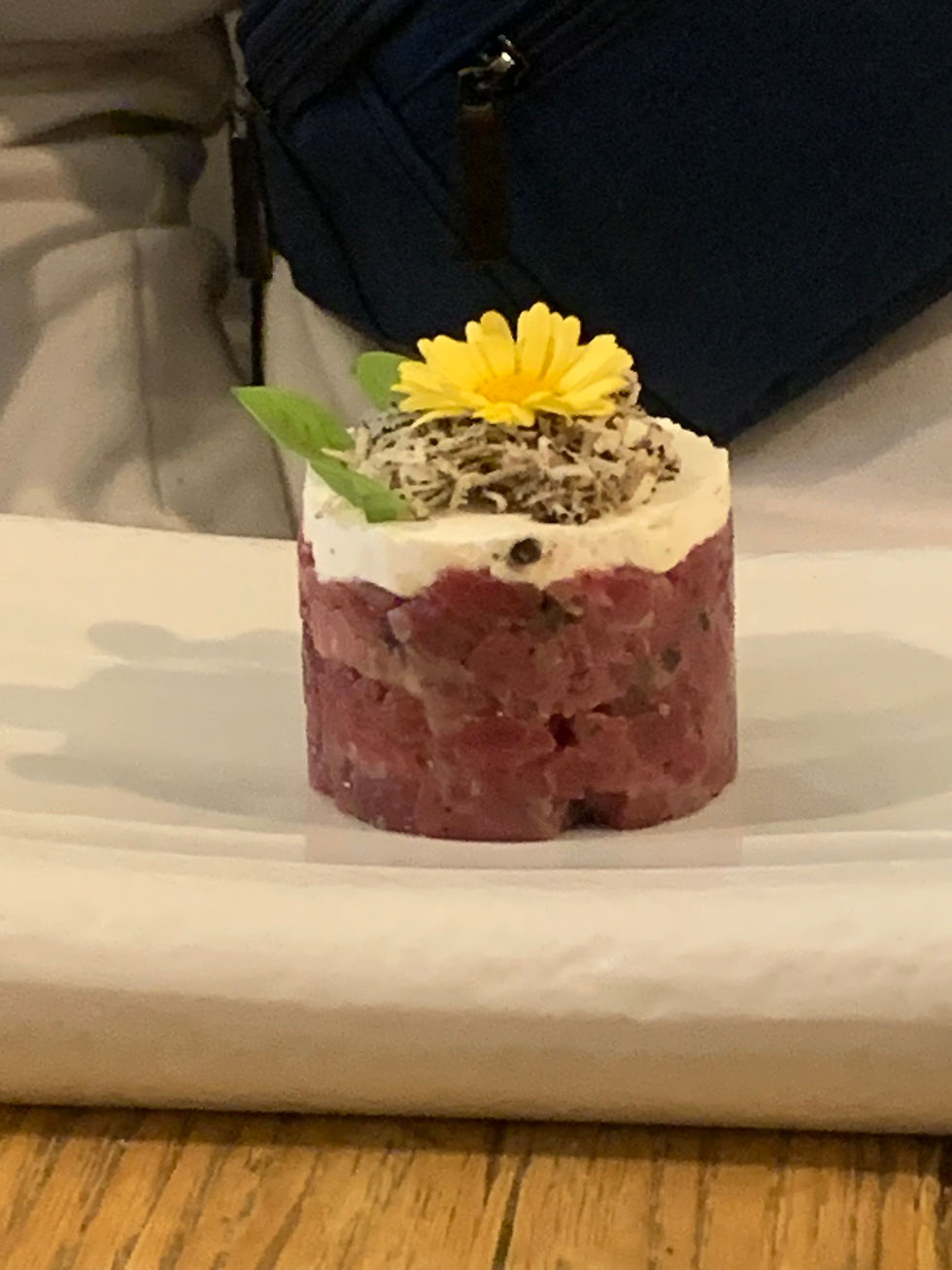
After a while, waiters began filing out of the kitchen with various trays. There were steaming pastas, beautiful salads, and a steak the size of your head. But the funniest looking meal was a tiny raw beef patty with a decorative flower on top. My table chuckled at it, but before I could make fun of it, the waiter promptly set it down in front of me. Suddenly the jokes ended. I was hesitant to try this beef tartare, but then again, I was here for the new experiences. The beef was incredible, and a light spread of truffle sauce perfectly complemented the salty taste of the meat. The restaurant itself was also very comfortable, with a brick interior and wine bottles decorating the walls.
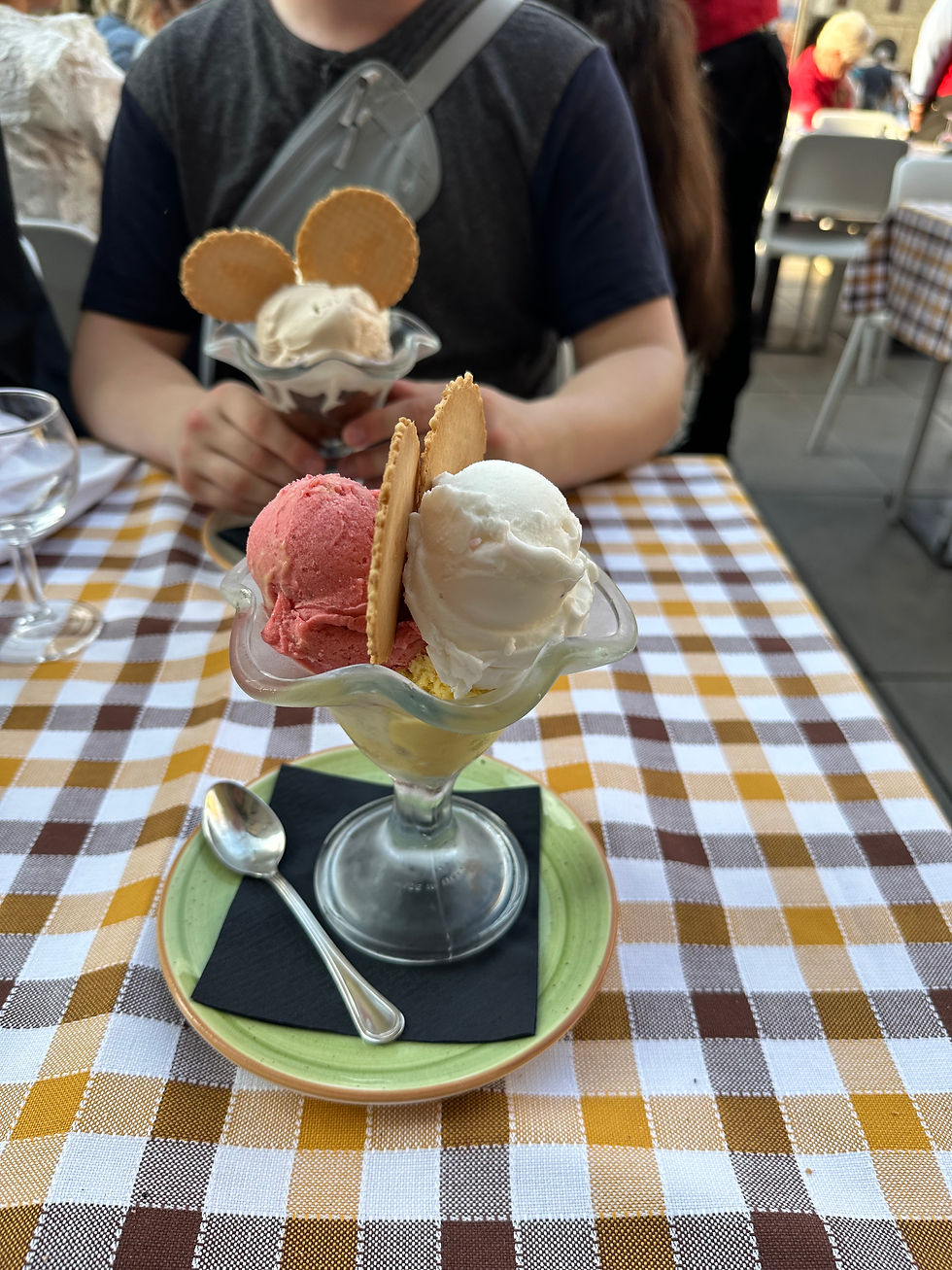
Although this first meal was incredible, I hoped to get a little better by my next attempt at Italian. Tucked away in one of the villa’s drawers, I found a small Italian translation book. I vigorously read through its pages, trying to get a small collection of words and phrases memorized. At our next outing, we settled on “Il David Ristorante” for dinner. The restaurant was more of a tourist attraction, but it had a beautiful view of the Palazzo Vecchio and the heart of the city. Being the American that I am, I successfully ordered a Hawaiian pizza in Italian, and I was feeling pretty good about myself. Until dessert came. I glanced through the menu and found gelato. The translation book taught me how to say, “What flavors do you have?” in Italian. Oddly enough, I didn’t think I’d have to understand what his answer would be. I had no idea what he said, so I just nodded my head in agreement and said, “I’ll have that”. He then laughed and explained in English, “We have every flavor”. I was able to mutter “fruit”, and he returned shortly with a massive bowl of strawberry, pineapple, and lemon gelato.
Both of these restaurants were amazing, but I felt defeated in my attempts at the language. But one thing about me is I don’t give up easily, and I would get another chance the next day. Dr. Horner allowed us to split up into groups and find our own restaurants for dinner. A few of us asked if he had any recommendations. He suggested a small restaurant not too far down the road called “Giovanni’s”. His directions led us through the winding alleyways away from the crowds of tourists. We wandered the city until we found the hidden address down a lonely street. An Italian man stood yelling at his cellphone in front of the door. We awkwardly stared at him, until he took notice of us. One student stepped forward and tried to convey that we were “students of Dr. Horner”. “Show me picture”, he said in broken English. Once we found a picture of Horner, his face softened, and he chuckled while ushering us inside. Italians usually eat dinner much later, so the restaurant was completely silent and empty. This allowed us a more private dining experience, and we were able to have easy conversation. A few photographs and newspaper articles hung from the walls. Giovanni, or Johnny as he preferred to be called, came to take our order after a few minutes. Instead of faking my way to Italian, I decided to take my time pointing to the menu and only using the phrases I had learned from my book. The process took a little bit longer, but I was able to order exactly what I wanted, and we were able to understand each other. I ordered amazing ravioli with bacon and basil.
Overall, all the food exceeded expectations. Every flavor was unique, and only the freshest ingredients were used for their recipes. Each element was aged for months until they gained the desired taste. No two meats were the same, all being seasoned and presented differently. The meals never felt too heavy, and everyone admitted they did not feel fatigued after eating.
Ultimately, I discovered it helps to learn a little bit of the language beforehand, but you don’t need to feel too intimidated if you don’t understand right away. Most workers are very friendly and willing to work with you when ordering. They appreciate that you are trying to learn, and they will even teach you how to pronounce certain foods. Patience is key to understanding. Whether it’s reading through a translation book or spending a bit more time with a multilingual green owl, learning a bit of the language beforehand is incredibly helpful to avoid getting lost in translation. After some time, you can confidently order at any café or restaurant. With a little bit of time and effort, maybe you can become as fluent as I am, throwing “ciao” and “grazie” all over the place.
That's all from Italy for this week! Until then, consider how the Hawaiian pizza is all over Italy without judgment, and how the recipe actually came from Canada.


Had the same experience at a mexican restaurant in Weatherford